The enormous number of attendees is not the only factor in defining a successful brand event. The stronger question is what those people actually do while they are there. The lively interaction during and after the event, impressions, and willingness to keep the connection after the event are good signs.
The best audience engagement is about the environment design, which revolves around human activity. It is not just meaningless entertainment. Every event component is worth the cost when it is in line with the brand story and the event's main idea.
Engagement Starts With a Reason to Participate
Engagement is often confused with visible activity. The main purpose is having meaningful involvement. Therefore, social media exposure, attendance numbers, and applause are not the main successful indicator.
The best achievement is when visitor interaction with other people and the brand's event environment support each other. Many people who only watch the presentation are not as valuable as a group of people who ask meaningful questions.
This distinction matters because participation requires a reason. Visitors want to get information, entertainment, and opportunity, so give them all they need. This will help to find the event direction.
Match Engagement to the Event Objective
Interaction might be different for each event.
Learn
Engagement in the education event must help the visitor to get and apply the information. Having a workshop, case discussion, live Q&A, or quiz will give a livelier activity.
Connect
If relationship-building is the priority, design opportunities for people to meet with context rather than simply telling them to “network.” Natural interaction can be created by having something like facilitated interaction or group activities.
Discover
Brand experiences often benefit from curiosity. The guest can get a better real-life experience by having demonstrations and interactive installations. It is even better with exploration and sensory experience. That kind of environment is way better the conventional event.
Contribute
Some events need the audience to provide ideas, opinions, or feedback. Something like live voting will shape a good experience.
Celebrate
For milestone events, engagement can be emotional rather than educational. You should try to make a memorable collective experience, entertainment, and a surprising event.
Purchase/Lead
The commercial outcome must have engagements that encourage the practical follow-up step. Product trials, consultations, demonstrations, interactive comparisons, and qualified conversations can move guests naturally from interest toward action.
10 Audience Engagement Ideas
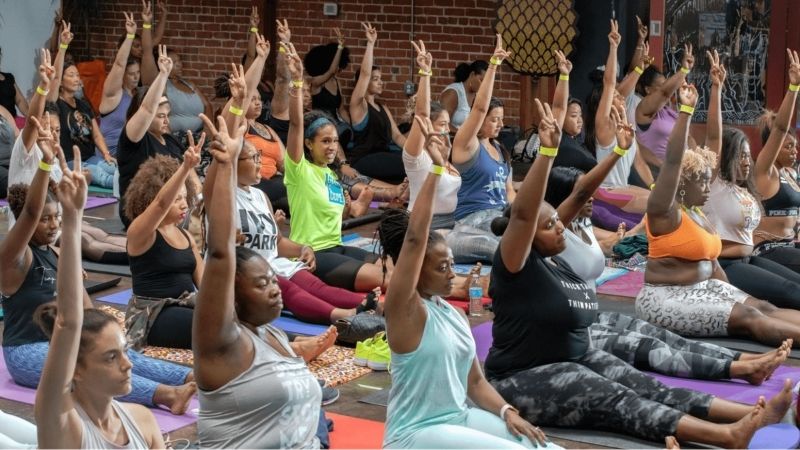
The audience engagement ideas you can implement are:
1. Live Polling
When it works: It is well suited to an activity where the audience's thinking can influence the flow. For example: presentations, conferences, and discussions.
Appropriate audience: This is for medium and large groups. It is suitable when the visitors have different levels of knowledge and opinion.
Execution consideration: Keep questions simple enough to answer quickly. More importantly, show how the results affect the session.
2. Collaborative Content
When it works: Collaborative content works well for the type of activity where the story, idea, and feedback from the audience are meant to be collected.
Appropriate audience: It is suited for an audience group of customers, employees, or community.
Execution consideration: Give participants a clear contribution format. A wall asking “Share your thoughts” may produce little, while a prompt such as “What should our industry stop doing by 2030?” gives people something specific to consider.
3. Interactive Installations
When it works: Arrival space, display space, and launching venues are the most effective locations for installation. At that place, the visitor has time to explore.
Appropriate audience: It is for the visitor that reacted well to physical and visual or sensory activity.
Execution consideration: Interaction should not become complicated. It gives simple instructions, and the space is large enough to prevent frustration because of waiting.
4. Personalized Experiences
When it works: VIP and regular customer events will be better with personalization. It makes the visitor relationship with the brand more intimate.
Appropriate audience: It is good for VIP audiences and small groups with realistic individual attention.
Execution consideration: Personalization should feel useful rather than intrusive. No need to collect unimportant information when you have good content, personalized recommendations, and sessions.
5. Gamification
When it works: This makes the event gain more energy and experiential activity.
Appropriate audience: Gamification is suitable for flexible attendees who enjoy simple competition. Make sure that this kind of activity is in line with the event theme.
Execution consideration: Do not just have a game center in the event just because it is fun. Make sure that there are clear regulations and supporting the event rather than competing with the main objective.
6. Facilitated Networking
When it works: It is well suited to people who want to get connected to other people but do not know where to start.
Appropriate audience: It is well suited for business forums, executive and industry meetings.
Execution consideration: Provide a reason for each interaction. Topic tables, matchmaking prompts, rotating conversations, or curated introductions are usually more productive than leaving guests alone with a name badge and an instruction to network.
7. Q&A Formats
When it works: Q&A can deepen presentations, panels, town halls, and leadership sessions by allowing the audience to raise issues that matter to them.
Appropriate audience: Almost any professional audience can benefit, particularly when the subject has practical implications.
Execution consideration: Make sure to make the session interactive and attractive to the audience. For example, you can make a quick-fire Q&A to make it livelier.
8. Hands-On Product Interaction
When it works: This interaction is well suited for tech showcases, demonstrations and exhibitions, or product launches.
Appropriate audience: It is for media partners, industrial scale, prospective leads who need to see the product directly.
Execution consideration: Make sure to give the visitor time to use the product. ask ad compare some features. It is better than giving a boring demonstration.
9. Social/Content Moments
When it works: A launching brand event is a chance to do design photography. It is also possible to make short videos with a supportive environment and unique visuals.
Appropriate audience: This is beneficial for people who make content and are active on social media.
Execution consideration: The experience needs to be worth photographing without depending entirely on social sharing. Make sure that the lighting and brand visibility are working well with people who want to post it on their social media account.
10. Surprise-and-Delight Moments
When it works: Special entertainment performances, exclusive and spontaneous recognition work well. It is better to give special gifts and program surprising, changing activities to gain more impression.
Appropriate audience: This is well suited for brands, employees, visitors, and companies.
Execution consideration: Surprise should support the event's emotional direction. Theatrical entertainment surely will give an unforgettable moment. Timing and relevance matter more than spectacle.
Designing Engagement across the Entire Guest Journey
The strongest experiences create a sequence in which each stage prepares guests for the next.
- Pre-event: Engagement and anticipation can be encourage from registration and personalized activities. The visitor can participate in voting or challenges.
- Arrival: A first impression is more important than only collecting credentials. Event direction and theme can be displayed with step-by-step discovery, interactive registration, and conversation.
- Main program: This is where engagement should support the core objective. Questions, demonstrations, and short exercises are necessary.
- Breaks: Do not treat breaks as dead time. Do not make the breaks cooling down the visitor enthusiast on the event. Make the product experience and collaborative activities to enlighten the informal activity and avoid disengagement.
- Closing: The final part of the event must encourage the visitor to think about what they have got from the event, and what they should do after that. Make a transition in the ending by giving a recap note or clear next follow-up step, so the event surely has an impact.
- Post-event: Giving feedback and follow-ups are signs of engagement. You can also share the community invitation to give access to the resources. You cannot feel satisfied just because of the successful event, but also maintain the extended connection with the people after the event.
Don't Force Participation
Participation is simply not for everyone, so be considerate when choosing the participants. On the other hand, overly engaging only enthusiastic participants also makes the other people feel left out.
A better approach is to provide multiple participation modes. Make it possible to give feedback in some ways. The visitor can interact directly or digitally, have a private conversation, observe, and join the group.
Good event design gives people choices without making passive attendees feel guilty. Meaningful participation is the key. It is not just general participation.
Explore
our creative event capabilities. We will help to integrate the concept until the desired guest experience is achieved.
How to Measure Audience Engagement
Do not just see the numbers of interactions, impressions, and attendance. It should follow the event's main goal.
Interaction and dwell time, then the qualified leads conversion rate, are included in brand activations. Decent feedback, continuous engagement, or extended business activity are important aspects.
The key is to distinguish attention from action. Strong engagement pictures the attendee's contribution, understanding, or experience. It is also shown in the follow-up action.
Conclusion
Audience engagement is mainly about thoughtfully creating chances for participation. Natural interaction will be established in this way.
The best corporate and brand events give attendees a reason to take part and make that participation feel worthwhile.


