Organizing a creative event in Bali involves more than just finding an attractive location; it is about creating a memorable experience and lasting impression for guests.
A beachfront setting may look perfect in photos, yet it can present challenges regarding weather, acoustics, production access, and equipment protection. Conversely, while a hotel ballroom might offer comprehensive infrastructure, it may not necessarily provide the scope for creativity required.
Therefore, the ideal venue is one that strikes a balance between visual potential and operational requirements. A thorough evaluation enables organizers to select a location that supports the event concept while minimizing risks during execution.
Choose the Concept Before Falling in Love With a Venue
A common mistake in planning a creative event is selecting a venue solely based on its visual appeal before establishing the event's actual needs. However, visual allure alone is insufficient to determine whether a venue is truly suitable.
Begin by defining the event's creative direction. Should the concept feel elegant and exclusive, energetic and immersive, relaxed with a tropical vibe, or experimental?
Also, consider the guest experience throughout the event. Gala dinners, product launches, corporate retreats, brand activations, and employee gatherings all have distinct spatial requirements.
Once the concept is established, translate those needs into practical requirements, such as guest capacity, stage size, seating layout, lighting, audio, entertainment, catering, branding, equipment access, and contingency plans for weather conditions.
8 Criteria for Evaluating a Bali Event Venue
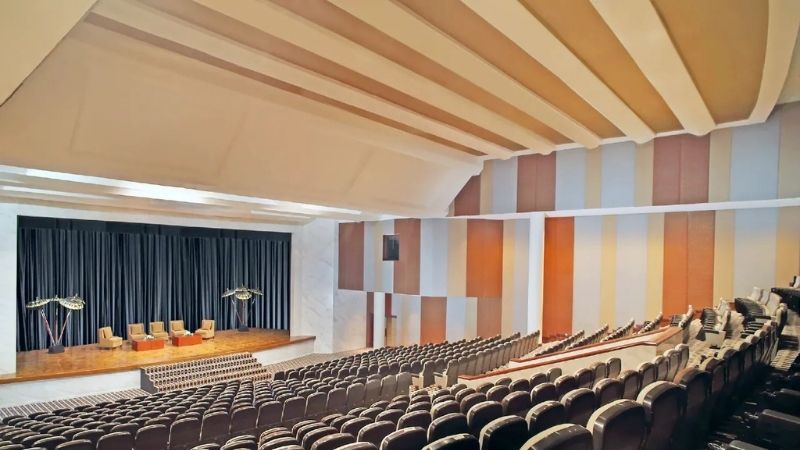
Before selecting a venue for a creative event, several criteria can be used to evaluate a venue:
Capacity And Guest Flow
A venue's stated capacity does not automatically mean it can accommodate your event comfortably. Ask how many guests the space can hold for your specific format, including stages, bars, dining tables, production areas, registration counters, and technical equipment.
Guest movement matters just as much. Check whether guests can move naturally from arrival and registration to the main event, dining areas, networking zones, restrooms, and exits.
Location And Transport
Bali traffic can significantly influence the guest experience, particularly when an event involves multiple hotels or locations. Consider travel time, road accessibility, parking, shuttle requirements, and whether the venue is practical for local and international guests.
For corporate events, also consider proximity to accommodation and whether suppliers can reach the venue without complicated routes. A visually spectacular location may become less attractive if transporting guests and production equipment requires excessive time or coordination.
Indoor/Outdoor Configuration
Determine which areas are genuinely available and how they connect. Some venues may advertise outdoor event spaces but have limited indoor areas suitable for a sudden weather change.
Look at the relationship between indoor and outdoor zones. Can guests move between them without disrupting the flow of the event? Is there sufficient covered space for dining, registration, backstage operations, or technical equipment?
Production Access
Creative concepts often require considerably more equipment than standard private functions. Check loading entrances, vehicle access, unloading zones, lift dimensions, stairs, corridors, and the distance between the loading area and event space.
Ask when suppliers can enter for setup and when equipment must be removed. Limited setup windows can affect labour requirements and production costs.
Power And Technical Infrastructure
Never assume that a visually impressive venue has the electrical infrastructure required for an event. Confirm available power, distribution points, backup systems, generator policies, and technical restrictions.
Large screens, lighting fixtures, audio systems, special effects, and catering equipment can place significant demands on power. Your production team should assess whether the existing infrastructure can support the planned setup safely.
Sound Restrictions
Outdoor venues often have regulations regarding music volume levels, operating hours, amplified sound, and entertainment. These can directly impact the use of DJs, live bands, and other forms of entertainment, as well as the feasibility of evening events.
Ask whether the venue has previously hosted events featuring amplified music and if there are any restrictions imposed by the surrounding area.
Weather Contingency
For outdoor events in Bali, a contingency plan for rain should be part of the venue assessment from the very beginning, rather than an emergency decision made on the day of the event.
Find out what the relocation plan is in the event of rain.
Can the event be moved to an indoor area? Can temporary structures be installed? Where will guests be directed? What protection is in place for lighting, audio, furniture, décor, and production equipment?
Brand/Concept Fit
Finally, assess whether the venue naturally supports the intended creative identity. A venue may be beautiful but visually inconsistent with the brand.
Look beyond the main event area. Consider architecture, existing furniture, colours, landscaping, lighting, signage restrictions, and surrounding views. The more closely the venue aligns with the concept, the less transformation may be required.
Venue Type vs Event Type
Different venue categories offer different creative and operational advantages. The best choice depends on the event objective, audience, and production requirements.
| Venue Type |
Best For |
Main Advantage |
Key Consideration |
| Resort |
Corporate retreats, conferences, incentives |
Accommodation, dining, meeting facilities, and event spaces in one location |
Guest movement and exclusivity can vary. |
| Ballroom |
Galas, conferences, awards, formal dinners |
Reliable infrastructure and weather protection |
Creative atmosphere may require stronger production design |
| Beach venue |
Brand events, celebrations, informal corporate gatherings |
Strong visual identity and natural Bali atmosphere |
Weather, sound, tides, and equipment protection |
| Villa |
Executive events, intimate gatherings, private experiences |
Privacy and residential luxury |
Limited access, capacity, power, and production space |
| Outdoor lawn |
Festivals, team events, dinners, activations |
Flexible layouts and spacious guest flow |
Weather contingency and temporary infrastructure |
| Unconventional venue |
Product launches, experiential events, creative activations |
Distinctive identity and storytelling potential |
Infrastructure and permissions may require additional planning |
Creative Possibility vs Operational Reality
Creative event planning works best when imagination and production planning develop together. A venue might offer a dramatic ocean backdrop, an unusual architectural structure, or a spectacular garden, but those features only become valuable if the production team can safely and efficiently work within the space.
A useful way to assess this balance is to separate the venue into three questions: What can guests see? What can the creative team build? What can the production team realistically operate?
For example, a venue may provide an ideal setting for a large LED installation, but restricted delivery access could make the installation impractical. Similarly, an outdoor dinner may look perfect during a site visit but require extensive temporary flooring, power distribution, lighting, and rain protection.
Collaborating with a
creative event partner in Bali can help determine and evaluate whether a stunning venue can accommodate a creative event and ensure the technical aspects are handled correctly.
Questions to Ask During a Venue Site Visit
Use this practical venue-inspection checklist:
- Guest arrival: Where do guests arrive, park, queue, register, and enter? Is the arrival experience clear during peak periods?
- Guest flow: Can guests move easily between reception, main event areas, dining, networking zones, and restrooms?
- Production access: Where do trucks unload? What are the dimensions of loading doors, corridors, lifts, and access routes?
- Setup schedule: When can the production team begin loading in, building, testing, rehearsing, and dismantling?
- Stage and sightlines: Where can the stage go? Will all guests have an unobstructed view?
- Power: Where are the electrical points? What capacity is available, and is a generator permitted?
- Sound: What are the permitted sound levels and operating hours? Are there nearby residences or other venues?
- Weather: What is the rain plan? Where can guests relocate, and how quickly can the event be moved?
- Technical equipment: Are rigging, lighting, LED screens, special effects, or temporary structures permitted?
- Branding: Where can signs, backdrops, screens, installations, and branded elements be placed?
- Catering: Where is the kitchen or preparation area, and how will catering teams access the event space?
- Safety: Where are emergency exits, fire equipment, first-aid facilities, and evacuation routes?
- Dismantling: How quickly must all equipment and materials leave the venue after the event?
One particularly useful practice is to take photographs from the guest's eye level, not only from attractive angles. This reveals sightline problems, distracting structures, low ceilings, blocked views, and potential branding issues that may not be obvious in promotional imagery.
Common Venue Selection Mistakes
Choosing based only on photographs is one of the biggest mistakes. Other problems include confirming capacity without considering the event layout, overlooking loading access, assuming outdoor events can easily move indoors, failing to verify power requirements, and ignoring sound restrictions.
Another mistake is visiting the venue without the production team. Creative and operational questions often emerge only when someone evaluates where the stage, lighting, audio, screens, cables, technical control areas, and equipment will actually go.
Conclusion
The right Bali venue should do more than look impressive. It should support the creative concept, guest experience, production requirements, and contingency strategy without creating unnecessary operational problems.
By evaluating capacity, accessibility, infrastructure, acoustics, weather conditions, and creative suitability during the site selection process, event organizers can find a venue that is not only inspiring but also practical.
Ultimately, the best location is one that harmonizes creative ambition with operational realities, ensuring the event concept feels exceptional without compromising safety, comfort, or smooth execution.


