A memorable brand event should do more than place a logo on a backdrop and invite people to listen to a presentation. The strongest experiences make guests feel involved in the brand story from the moment they arrive until they leave. Instead of simply receiving information, attendees explore, interact, react, and form personal associations with what the brand represents.
An immersion does not require a big money and advanced technology. The visitor can get a stronger impression from a great event environment. It is also completed with great narration and the possibility of direct participation. That is something that can't be beaten by expensive visual effects.
What Makes an Experience “Immersive”?
An immersive event allows the visitor to directly experience the event. The touchpoints help to communicate the brand messages.
Immersion is not merely meant to be virtual reality, augmented reality, interactive, and mapping. Technology can support an immersive concept, but it is not the definition of one.
An immersive space with great design can be achieved when all the event's physical components are in line with the brand profile. A simple product launch is memorable when it allows the visitor to find the product useful rather than just getting the old-fashioned presentation.
The real question is not,
“What technology can we add?” It is,
“What should guests experience that they cannot get from an ordinary advertisement?”
Five Layers of an Immersive Event
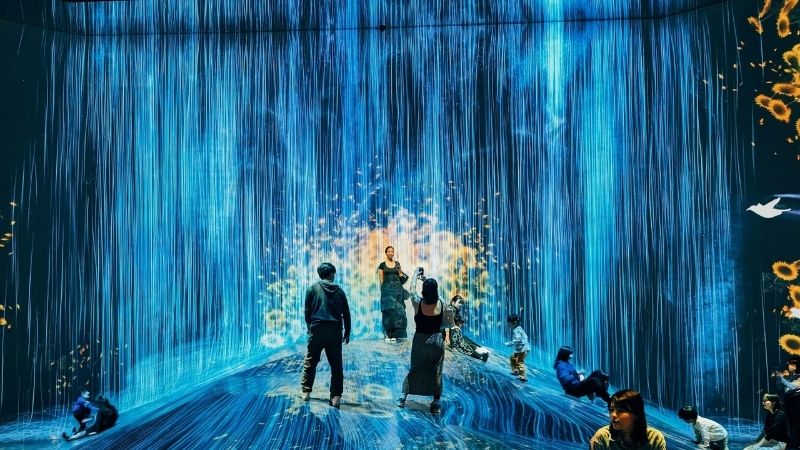
An immersive brand should not just depend on one great feature alone. It must combine some elements. There are five layers that give a practical framework to arrange an event that is impressive from start to end.
Narrative
Every immersive experience needs a story, even when that story is never formally announced to guests. The reason for the event's existence is given by the narratives. It lets the visitor know what to expect at the event.
A sustainable product needs events that explain the production flow from raw material to end product. A long speech is not necessary. The visitor can go through the installations, interactive displays, and demonstrations to find out. The narrative must be simple and flexible, so visitors can easily understand and find it in different formats.
Environment
The fastest way to drive visitor perceptiveness is by arranging the physical environment. Space communicates before anyone speaks.
The distinctive point must be visible between the conventional hall and the environment that is designed in line with brand identity. There are more spaces that use specific design, coloring, lighting, and signage, and so on to give a distinctive atmosphere.
Spatial design should also influence movement. The organizer can have several zones for different activities, like demonstration, interaction and conversation, or relaxation.
The objective is not to decorate every available surface. It is to make the environment feel intentional, with each area supporting a particular part of the experience.
Sensory Design
Involving some sensory design makes the immersion better. It does not have uniqueness when the visual graphics become the main part of the event.
Sound can establish atmosphere or signal transitions. Lighting can change the emotional character of a space. Textures and materials can reinforce a product's positioning. Carefully selected scents can even create a subtle association with a location or brand identity.
A brand's hospitality can make the experience livelier with physical representation of the brand story. Effective sensory design is selective. Every element must have their purposes that support the event, rather than competing with each other.
Participation
Guests remember what they do differently from what they merely watch. Participation therefore needs to be considered from the earliest stages of event planning.
There are many forms of interaction:
- Product testing
- Installation contribution
- Personalized item creation
- Break the challenge
- Join a workshop
- Join in voting
- Have a great conversation about the brand
The important factor is relevance. It should help the visitor able to know more about the brand, product, and message personally.
Well-designed participation will make the visitors contribute to the experience. They are not just passive attendees.
Emotional Progression
An immersive brand event should give an emotional roller coaster from start to finish. Make sure that the experience will push the visitor's curiosity, making them more engaged, excited, and anticipating something great.
The opening might create intrigue. The discovery phase can gradually reveal information. Involvement increases with the interactive momentum. On the other hand, the product reveal and demonstration will be the emotional peak.
Then, give a space for the visitor to grasp what happened and think about what they should do after that.
This progression prevents every moment from competing to be the biggest moment. Instead, the event builds toward something meaningful.
Map the Guest Journey
Individual even component can be done later. The more important thing is establishing the guest flow mapping. The visitor's attention will shift away from one place. They can try activities to get a more complete experience.
The six stages of a useful journey:
Before arrival → Arrival → Discovery → Interaction → Peak → Exit
Before arrival: Even from the start, the experience is beginning. The event's narrative can be introduced in the emails, invitation, pre-event activity, and registration to build more expectation in the visitor.
- Arrival: The first few minutes matter. The entrance design, registration arrangement, and signage are so important. The music and lighting will enhance the atmosphere. It surely makes the visitor feel different.
- Discovery: Guests need opportunities to explore. The display, installation, and demonstration show clear ideas to visitors.
- Interaction: Participation needs reasons. The event must encourage curiosity to get more information about the brand.
- Peak: Every event needs a moment that feels significant. It could be a product reveal, immersive performance, unexpected transformation of the space, founder presentation, or collaborative activity. The peak should deliver on the anticipation created earlier.
- Exit: Leave does not mean that the experience is over. The relationship can be extended with follow-up acts like giving takeaways and a message.
Mapping these stages also exposes potential weaknesses. If the event has an impressive entrance but nothing interesting after it, the journey is unbalanced. Participation must be done immediately before the visitor feels disengaged.
Technology: Use It Only When It Serves the Idea
Technology has a significant impact on event communication. Interactive screens with VR tools can be seen as meaningless and disconnected from the brand story, and the visitor can see it clearly.
An ordinary room can change because of projection. The changing visual is supporting the story. Visitors can explore complex specifications on their own with the help of interactive screens. AR or VR makes the impossible physical experience accessible. It helps the visitor gain better knowledge about the product, environment, and even the scenario. Immersion is enhanced by the motion tracker, lighting, digital installation, and responsive space. However, technology is not the concept; it is just the tools.
Before adding a technical feature, ask what it enables guests to understand, feel, or do. The technology is not part of the event's experience when the idea delivery is clearer and stronger even without it.
Designing for Participation, Not Spectatorship
Many events describe themselves as immersive while keeping guests in essentially passive roles. That may create an attractive event, but it does not necessarily create deep engagement.
Participation should be built into the event architecture. There are some paths that can be chosen by the guest to get to different spaces. They can collaborate with other visitors and have influence. The interaction with the product is direct, and they can create something as part of the environment.
The most effective participation also feels natural. No need to listen to a long instruction to understand what to do. The activity should drive curiosity rather than forced attraction.
A
Bali event creative team can connect storytelling, spatial design, production, and audience interaction into one consistent experience.
How to Know Whether Immersion Worked
Immersion should be evaluated through more than attendance numbers. Look at behavioral and qualitative indicators. How long did people spend in key experience zones? Which activities generated the most participation? Did guests share the experience organically? What did they remember afterward? Did they understand the intended message?
Giving surveys, interviews, and interacting with leads to understand conversion behavior is important evidence for development. When the visitor can describe the brand in their own words and perspective, then that's a big indicator. When the visitor remembers the feeling, not only what they see, then the event is successful.
Conclusion
An immersive brand event is ultimately about creating meaning, not spectacle. An environment supported by great narratives and emotional progression will give a memorable experience to visitors. Technology can strengthen that experience when it serves the concept, but thoughtful design should always come first. Working with a Bali event creative team can help bring these connected elements together into one cohesive guest journey.
Original MC Opportunity: Alpha Seven will help you to arrange a customized guest flow mapping diagram. They can explain touchpoint connections and demonstrate visually. The team will arrange the pre-arrival to the final post-event interaction. It is helpful when developing a presentation to explain the event concept to the stakeholders. An abstract experience can be translated into easier language, so everyone can understand and do an evaluation.


