Planning an event in Bali? The more you understand local insights, the better. This can include venue types, regulations, resources, and talent. Local knowledge comes from firsthand experience, such as local rules, weather, local customs, and accessibility. All these factors can shape the character and direction of your event concept.
What “Local Knowledge” Actually Means
It refers to a deep and comprehensive understanding of local aspects in Bali. More than just the location or venue, local knowledge examines the event site from a holistic perspective. The event team must be physically present in Bali to understand details such as vehicle access, logistics routes, and panoramic views that serve as the event’s backdrop.
Local knowledge also pertains to how the event company interacts with vendors, talent, authorities, and the government. Why is a local approach important? The more the event team understands the local context, the more accustomed they’ll be to limitations, regulations, and community preferences.
An event agency might tell you that they frequently interact with Balinese people. That’s not what you should be focusing on; rather, you need to ensure that all relevant aspects are thoroughly considered. Every local detail must be tailored to the event’s concept.
How Local Knowledge Impacts Event Execution
There are various reasons why an event team needs to consider local insights. The team can become adept at making the best decisions and cleverly overcoming obstacles. A lack of local knowledge can make event management less efficient. Here are some ways local knowledge can influence an event in Bali.
Venue Suitability
You might find a charming, popular venue, but it isn’t always ideal for your event concept. Local knowledge makes it easier for the event team to select a venue based on accessibility, capacity, and facilities. A wedding or wellness event might be suitable on the beach, but not for an event that requires a lot of equipment.
You should avoid venues with limited accessibility if you plan to invite many attendees. Each venue has its own strengths and weaknesses. Match your event’s needs with the venue based on its capabilities and suitability.
Access And Transportation
Don’t just consider distance using a navigation app; you also need to understand typical traffic conditions in the area. Depending on when the event is held, this can affect traffic density as well. Find out if any groups of attendees will be arriving at the venue by bus.
If so, find out whether the venue in question can be accessed by large vehicles. Some places in Bali are not easily accessible by bus. Passengers may have to get off at a certain point and then continue on foot or take local transportation. In addition, consider different routes for delivering equipment to make it more convenient for participants.
Supplier Coordination
Local knowledge is also crucial for coordinating the team with vendors or suppliers. It’s not just about making bookings or placing orders; it’s also about understanding each vendor’s strengths. A credible event company relies on high-quality vendors to meet the event’s needs effectively.
An event team that thoroughly understands suppliers and can communicate smoothly can avoid misunderstandings and support optimal execution once the event begins. Good relationships between the event team and suppliers/vendors will make overall event management much smoother.
Production Logistics
The team must be physically present on-site to identify safe and efficient logistics routes. The event company must, at a minimum, understand electrical access, storage space, and the best routes. Different venues naturally have varying conditions; equipment may be difficult to move if a van lacks direct access to the main area.
Weather Planning
A contingency plan is necessary to anticipate weather that isn’t always easy to predict. Prepare protection for equipment and covered areas. Conduct simulations in case of weather changes so you won’t be caught off guard when they actually occur.
If the event takes place in a building or indoor area, this isn’t much of a problem. However, prepare an optimal contingency plan if the event is to be held outdoors. It’s not about the weather conforming to our wishes, but about how we can anticipate the adverse effects of weather changes.
Local Schedules And Conditions
There are times when Bali gets very crowded, such as during major holidays and peak travel seasons. Plan logistics well in advance to account for this, so that equipment can arrive on time. It’s important to understand these specific periods, which may differ in regions outside of Bali.
Cultural Context
Want to incorporate cultural elements or activities into your event? Understand how to respect them and the local rules regarding them. You may need to limit the use of elements considered sacred according to local Balinese beliefs.
For example, near Balinese temples, you need to be mindful of noise levels; you don’t want to disturb the locals’ worship. Yes, some temples in Bali are still active places of worship and celebration.
Local Knowledge Can Also Inform Creative Decisions
Event teams can make wiser decisions based on local knowledge. Understand all the benefits a venue has to offer and leverage Bali’s natural charm to enhance your event. A physical site visit combined with an event company’s years of local experience can strengthen the concept of every event.
Offering far more benefits than online research, local insight can maximize a venue’s potential. Once the team has researched the location, they can generate ideas; this might involve reassessing the distance to spiritual sites, incorporating more suitable architectural elements, or using more relevant materials.
Ideas from clients and event organizers can then be tailored to real possibilities, rather than remaining mere, uncertain visions. Without sufficient local insight, the team may struggle to create more creative events that align with local potential.
Examples of Problems That Local Preparation Can Prevent
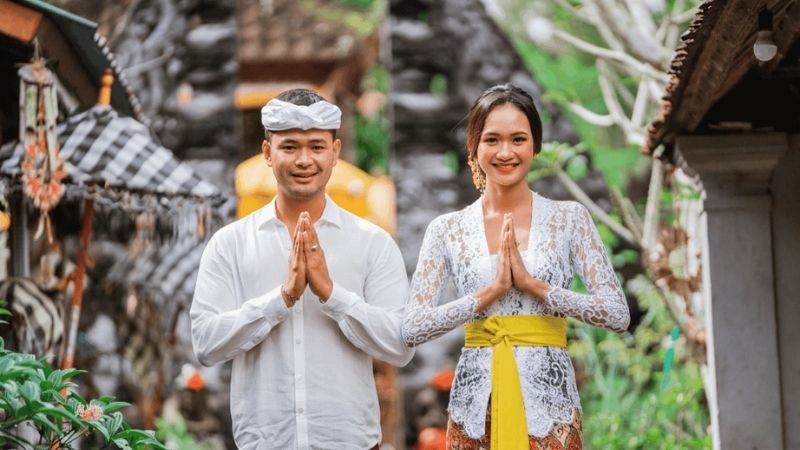
Anticipating problems that might arise once the event has begun is crucial. We can’t guarantee that everything will go exactly as planned. Therefore, contingency strategies are essential in event planning. The following examples can help you understand just how important local preparation and management are for addressing common issues.
Example 1: Anticipate Bad Weather
The venue team has designated a covered area not too far from the main outdoor area. If it does rain during the event, participants can be directed to the covered area via a pre-planned route. The event can continue even in the rain, and participants can still follow along. If this isn’t prepared at all, the event could come to a complete halt because participants won’t be able to participate properly.
Example 2: Logistics Flow for Trucks and Vans
The event requires an additional sound system beyond what the venue provides, along with a projector screen and several other pieces of equipment. The supplier uses a van or pickup truck to deliver all of this, but it turns out the logistics route hasn’t been properly managed. Large vehicles have difficulty reaching the main area; they must first be unloaded and carried manually, which requires significant effort.
It’s possible to set up a new logistics route, but the team might be confused, and it could take a long time to resolve. If the event team knows all the possible logistics routes, including those for large vehicles, they can more easily prepare a route so that the equipment arrives right at the door.
From these two examples, we know that on-site inspections are crucial. It’s not just about getting the most out of the venue but also anticipating risks that might arise there. The team won’t be caught off guard by common problems and can handle them effectively.
Local Network vs. Quality Control
Local knowledge and networks can be enhanced with comprehensive quality control to ensure the best event outcomes. An event company might tell you they have an extensive network of suppliers and vendors in Bali, but that’s not enough. They must be discerning in selecting quality partners and know which ones best align with your event’s concept.
They might focus solely on competitive pricing or rely too heavily on a single connection, resulting in a lack of quality focus. Therefore, a local network must be complemented by a commitment to quality. Choose vendors based on their extensive experience, capacity, portfolio, or relevance to your event’s style.
A
local creative event company in Bali can combine local operational context with creative and production planning. Everything is integrated; they seek out what’s most suitable to deliver an event that meets the client’s expectations.
Questions to Assess an Agency’s Local Experience
Formulate questions that go beyond just getting a general understanding of the event agency or company, such as what kinds of events they’ve managed and how long they’ve been in business. Your questions should be more specific and targeted; here’s a list:
- What event logistics issues have occurred in the past and are common?
- Where are the venues usually held?
- What was the scale of previous events?
- How does the team handle the overall venue setup?
- What happens if it rains during an outdoor event?
- Does the event team conduct a site inspection?
- What factors should be considered when choosing an event vendor?
- Which local vendors or suppliers are most frequently chosen?
- What are the most common on-site issues?
Avoid giving answers that are too general or unconvincing after asking these questions. The more clearly they answer the questions above, the more professional and credible the event company is.
Conclusion
One of the keys to the success of an event held in Bali is how familiar the team is with local insights. It’s important to understand the local context, including vendors, suppliers, venues, weather, traditions, production, and entertainment. The deeper an event agency’s understanding of the local context, the more likely it is to get the most out of the venue and mitigate risks.
The event team also needs local knowledge to make strategic decisions, such as determining participant routes, sourcing equipment, and setting boundaries regarding cultural elements. In short, don’t just treat Bali as a location for your event; treat it as a partner with various strengths to enhance your event and minimize risks.


